
On 18 November 2026, gold and silver were under pressure for a reason that is the mirror image of the old “weak dollar, strong gold” line. Business Standard reported that a stronger US dollar and expectations of further Federal Reserve rate increases were weighing on both metals. Internationally, spot gold slipped about 1.4% to around $3,797 an ounce, the lowest since September 2025. December futures were near $3,799. Traders were pricing a 25-basis-point hike at the Fed’s 8–9 December meeting, and more than 80 basis points of tightening by September 2027.
Why a firmer dollar pulls the ounce price down
Gold is quoted in dollars and pays no interest. When the dollar rises, holders of other currencies need more of their own money to buy the same ounce, so demand cools and the dollar price tends to fall. Higher expected US rates do the same job from the other side: bonds start to pay more, and the opportunity cost of holding a bar goes up. Kitco noted the dollar at a 19-month high as precious metals broke to fresh 52-week lows. That is the global half of the Indian rate.
Why the Indian gram rate does not copy the ounce move
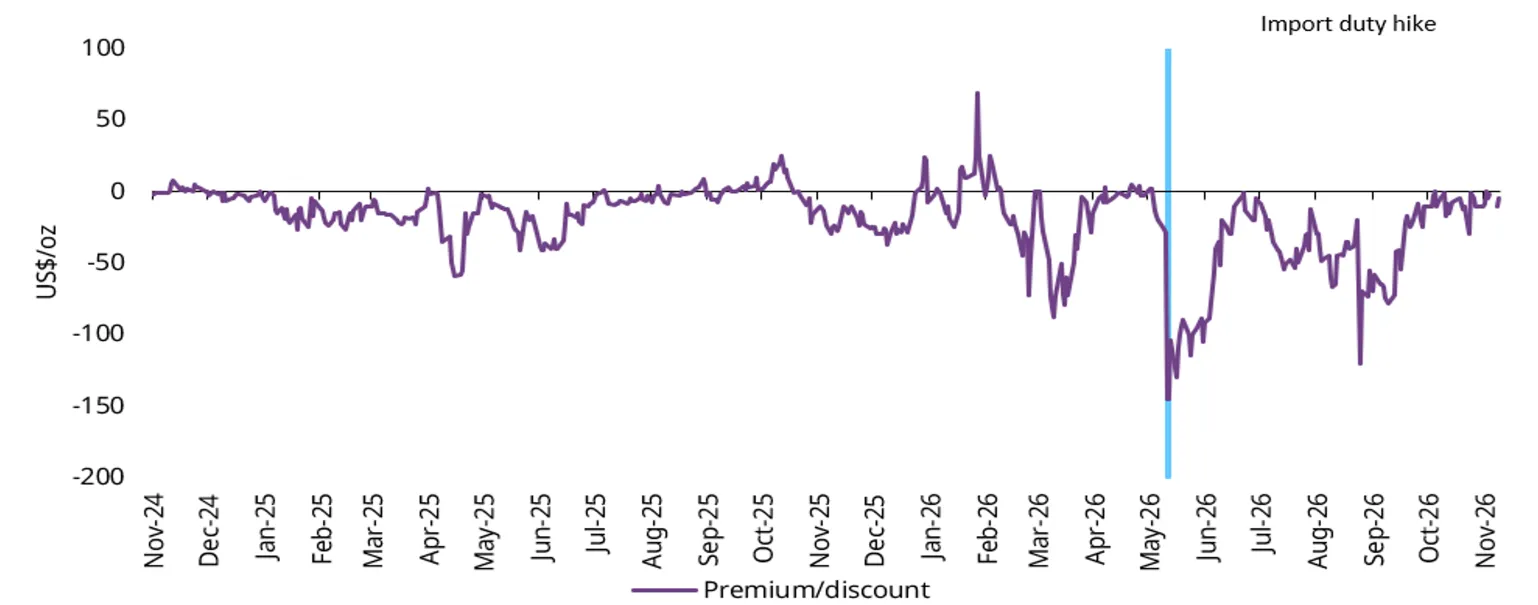
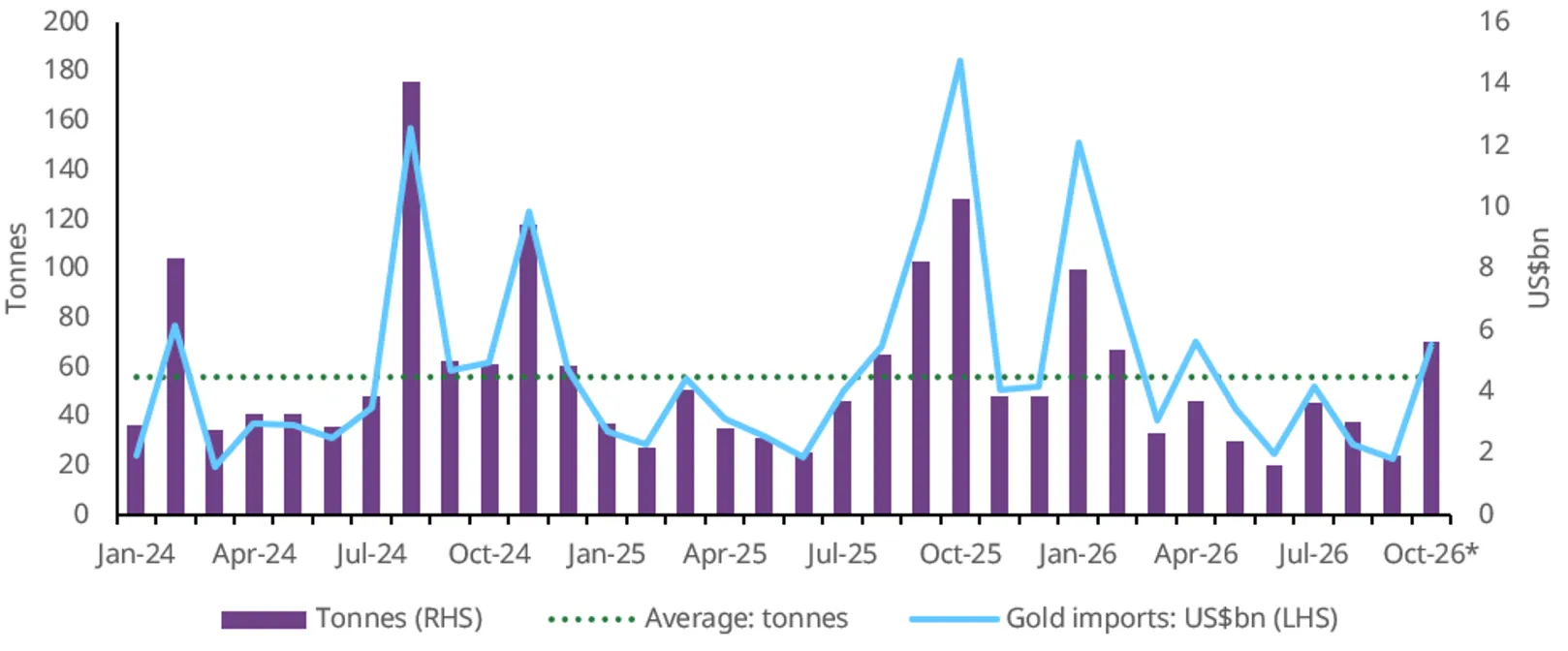
The price on a jewellery invoice is rupees per gram, not dollars per ounce. Three local wedges sit between the two. First, the rupee–dollar rate: a weaker rupee lifts the rupee gold price even when the ounce falls. Second, import duty. In May 2026 the duty was raised to 15%, from 6%. The World Gold Council estimates unofficial inflows jumped to about 50 tonnes in the third quarter, from about 3 tonnes a year earlier, because the higher duty widened the gap between official and unofficial supply. Third, the domestic premium or discount versus the landed cost. A 10% drop in the ounce price therefore does not become a 10% drop at the counter.
A workable conversion, before your jeweller’s premium, is: rupee per gram of 999 ≈ (dollar price per ounce ÷ 31.1035) × USD/INR × (1 + duty). One troy ounce is 31.1035 grams. At $3,797 an ounce the dollar price is about $122.08 per gram. Multiply by the day’s USD/INR rate, then by 1.15 if you are modelling the 15% duty, and you are in the neighbourhood of the IBJA screen. On 18 November that screen opened at ₹1,31,505 per 10 grams, or ₹13,150.50 per gram. Use the screen rate in the calculator. Use the formula only to see why the screen moved.
A 22K example at the 18 November open
Scale 999 to 22K with 22/24. ₹13,150.50 × 22/24 = ₹12,054.63 per gram. A 30-gram 22K chain is 30 × ₹12,054.63 = ₹3,61,639 of gold. Add making charges at, say, 12% (₹43,397) and 3% GST on the sum, and the bill is about ₹4,17,186. If the ounce price bounces 2% and the rupee is unchanged, rerun the sum with the new IBJA print. Do not scale yesterday’s invoice by the Comex percentage and assume the Indian bill moved by the same amount.
- Ounce price down: usually pulls the Indian rate down.
- Rupee down against the dollar: pushes the Indian rate up.
- 15% import duty: keeps the Indian rate above a simple ounce-times-rupee conversion.
- Counter premium or discount: the last gap between IBJA and your invoice.
The ounce price is the global input. The gram rate on your bill is that input after the rupee, 15% duty, and the jeweller’s premium.
— Gold Karat Calculator
Summary
A stronger dollar and expected Fed hikes took spot gold to about $3,797 on 18 November 2026. India’s rate still has to pass through USD/INR and a 15% import duty before it becomes the per-gram number you type into the gold karat calculator. Enter the day’s 22K or 24K rupee rate, not a guessed percentage of the New York move.